
God’s Glory In Creation
What does creation say to us about our glorious creator—God? When we consider the majesty and the power of creation—how much greater is our God who made it all?
God’s creation speaks of the glory of God. All of creation bears witness to the creativity, grandeur, power, and splendor of God.
The Psalmist writes, “Before the mountains were brought forth, or ever you had formed the earth and the world, from everlasting to everlasting you are God.” (Psalm 90:2, ESV).
All of creation comes from God who preexisted it and who brought everything into being before the beginning of time.

Loving One Another
Why is loving God and loving our neighbor the greatest commandment? How well are we doing with loving God and one another?
Loving God is essential to loving our neighbor well. And we cannot love God without also loving our neighbor. God’s greatest commandment is love. God is love.
When asked by the religious leaders which commandment is the greatest, Jesus answered, “The most important is, ‘Hear, O Israel: The Lord our God, the Lord is one. And you shall love the Lord your God with all your heart and with all your soul and with all your mind and with all your strength.’ The second is this: ‘You shall love your neighbor as yourself.’ There is no other commandment greater than these.” (Mark 12:29-31, ESV).
Prescriptive Vs. Descriptive
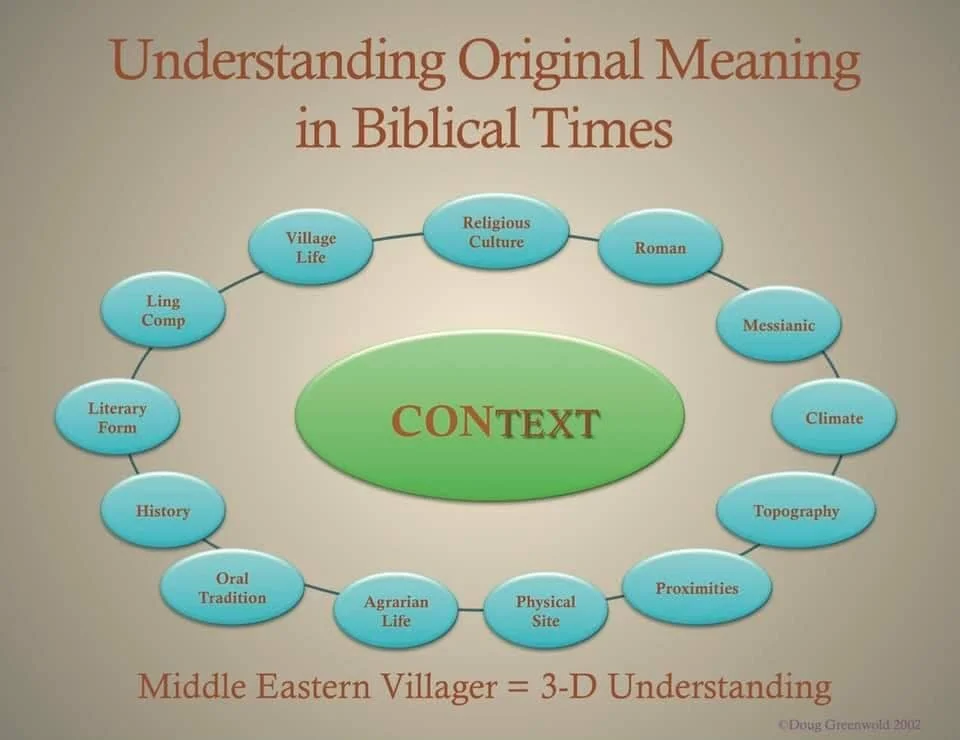
How do we understand how to apply the Bible to our lives? Is the Bible history to be read, or instructions to be adhered to?
In Sunday School settings, and in some Christian circles, the acrostic B.I.B.L.E. is used to explain the Bible as “basic instructions before leaving earth.”
This is an oversimplified and partially true definition of what the Bible is, and this definition distorts the complexity of God’s word and overgeneralizes the Bible—neglecting to take into consideration the diversity of the literary genres within the Bible’s covers.
The truth is, there are many literary genres found in the Bible, including: law, history, wisdom, poetry, narrative, epistles, prophecy and apocalyptic literature.

Leaping Into The Unknown
How do you move forward without knowing for sure what the outcome might be? How do you make decisions with so many unknowns?
We take leaps of faith into the unknown all the time, sometimes knowingly, and other times unknowingly. Life is filled with the unknown.
Making decisions without a sure—or full understanding of what lays ahead, and taking steps forward when we are uncertain of the outcome—this is acting in faith.
The author of Hebrews defines faith this way, “Now faith is the assurance of things hoped for, the conviction of things not seen.” (Hebrews 11:1, ESV).

The Presence Of Jesus
How present is Jesus with you? How near is Jesus with you when you speak to him?
The name “Immanuel”, means God is with us. Jesus is with us, and draws near to us, when we draw near to him. Jesus is present with us.
The Psalmist writes, “The Lord is near to all who call on him, to all who call on him in truth.” (Psalm 145:18, ESV).
God spoke through the Prophet Jeremiah of his presence, saying, “You will seek me and find me, when you seek me with all your heart.” (Jeremiah 29:13, ESV).

Producing Good Fruit
What kind of fruit does a good person produce? Are you producing good fruit?
Followers of Jesus are to serve God and his church in fruitful ways. We are to bear good fruit for the kingdom of God in this world.
In the Gospel of Matthew, Jesus rebukes the religious leaders for producing the wrong kinds of outcomes. Jesus said, “Either make the tree good and its fruit good, or make the tree bad and its fruit bad, for the tree is known by its fruit.” (Matthew 12:33, ESV).
Followers of Jesus should be discernible in how they live their lives, and in how they serve God and others. We should distinguish ourselves as God’s servants through the fruit we produce and we should stand out as “good trees” in a forest of unfruitfulness.
Jesus’ Holy Cross
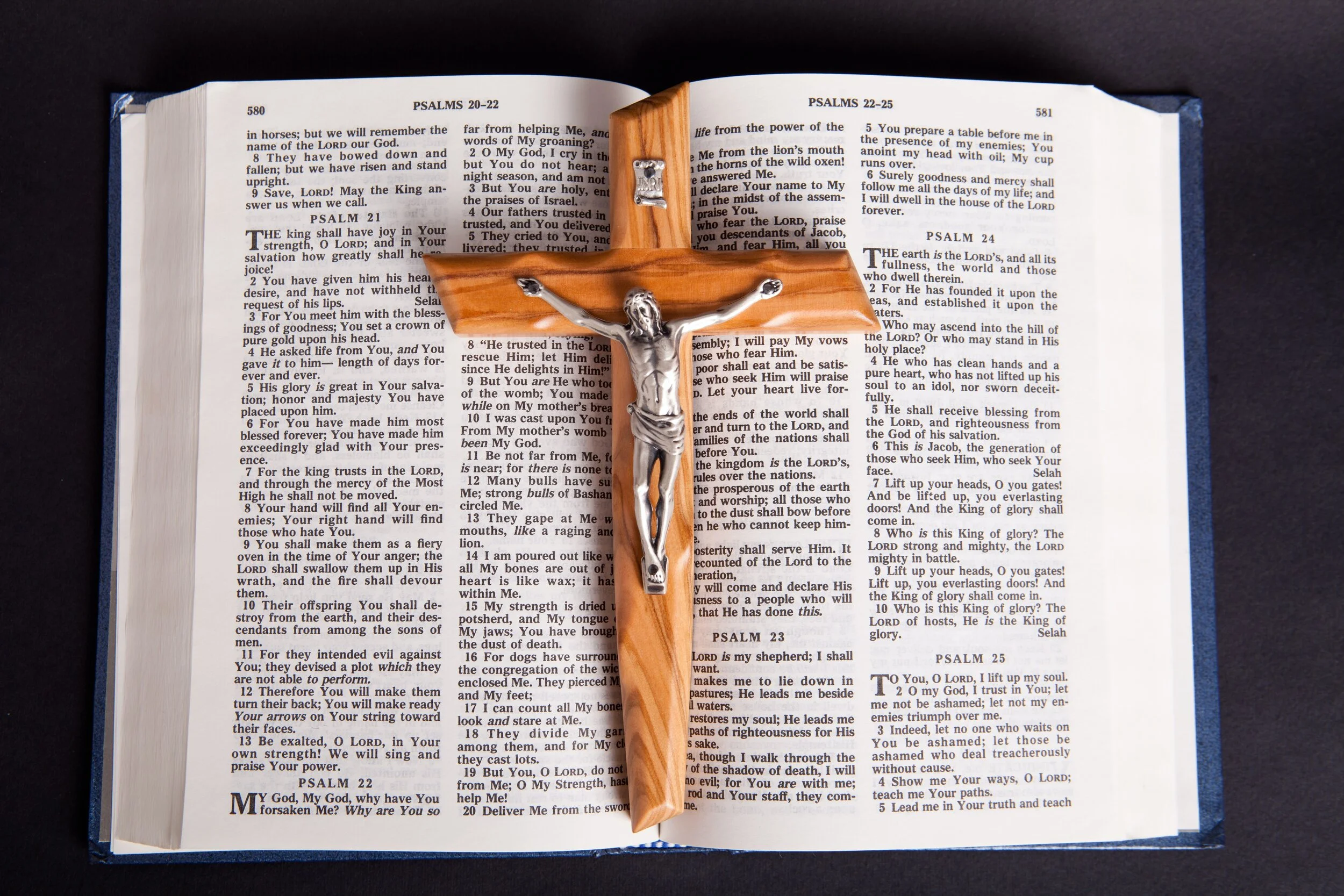
What does the cross of Jesus mean for us? How does Jesus dying on a cross change our lives? What transformation does the cross bring about in our world and in our lives?
The cross of Jesus guarantees that our sin has been dealt with—we are forgiven.
The cross of Jesus draws all people to God as a divine signpost welcoming us into the presence of God.
In the Gospel of John, the Apostle John records his account of Jesus’ teaching about being high and lifted up on the cross.

Doubt and Certainty
Have you ever had a crisis of belief? Have you ever doubted God or struggled with you faith?
Doubts are common. It is okay for us to wrestle with our beliefs and to have doubts and questions concerning our faith.
John the Baptist, Jesus’ own cousin and prophet, who also prepared the way for him, had questions and doubts when he was imprisoned for living out his faith and speaking out against Herod Antipas.
Matthew’s Gospel account captures John’s crisis of belief. Matthew tells us, “Now when John heard in prison about the deeds of the Christ, he sent word by his disciples and said to him, ‘Are you the one who is to come, or shall we look for another?’” (Matthew 11:2-3, ESV).

Guided By God’s Word
How do you know which direction is best? How do you know which way to go? Where do you go for the guidance you need?
We can feel overwhelmed looking for direction in life. The choices can be daunting. The pathway can be unclear. The right way can be darkened.
The Psalmist writes, “Your word is a lamp to my feet and a light to my path.” (Psalm 119:105, ESV).
We can receive the guidance we need through the illumination of God’s word.

Doing The King’s Business
Who do you represent as you live your life, do your work, and conduct yourself in the world? On whose behalf do you live and do business?
We all represent someone and some worldview, purpose, or belief in how we conduct ourselves in this life. We do not live and work and do the business of life in isolation, or without influence.
In Luke’s Gospel account, in chapter nineteen, as Jesus was passing through Jericho on the way up to Jerusalem, Jesus pursued a tax collector named Zacchaeus. Jesus went to his home and Zacchaeus came to know Jesus as the messiah and became a child of God, repenting and giving half of all he had to the poor and restoring anyone he defrauded four fold—twice what was required by the law.

Jesus Calls The Unexpected
What kinds of people does Jesus call to follow him as his students? Who does Jesus choose to be his followers?
While many teachers wait for the very best and the most eager students to flock to them, to follow them, and to sit under their teaching, Rabbi Jesus goes out to unlikely places and chooses the most unexpected and the most unlikely candidates to follow him.
Rabbi Jesus chooses his followers from the most unexpected pool of people, and from the most unexpected places. Jesus chooses the most unlikely people to follow him—he chooses people like you and me.

What Your Works Say
What do your works, the things you do, say about what you believe?
Our actions speak louder than our words.
A sermon is better seen and received when it is lived out, rather than simply spoken.
Our works speak volumes about what we believe. Our faith is communicated through our actions and the way we live out our lives.
The Book of James tells us, “Faith by itself, if it does not have works, is dead. But someone will say, ‘You have faith and I have works.’ Show me your faith apart from your works, and I will show you my faith by my works.” (James 2:17-18, ESV).
Faithful in the Little Things
What are you doing with what you have? Are you being faithful with the time, talents, and resources you have been entrusted with?
When we are faithful in what we have been given, God will trust us with greater things.
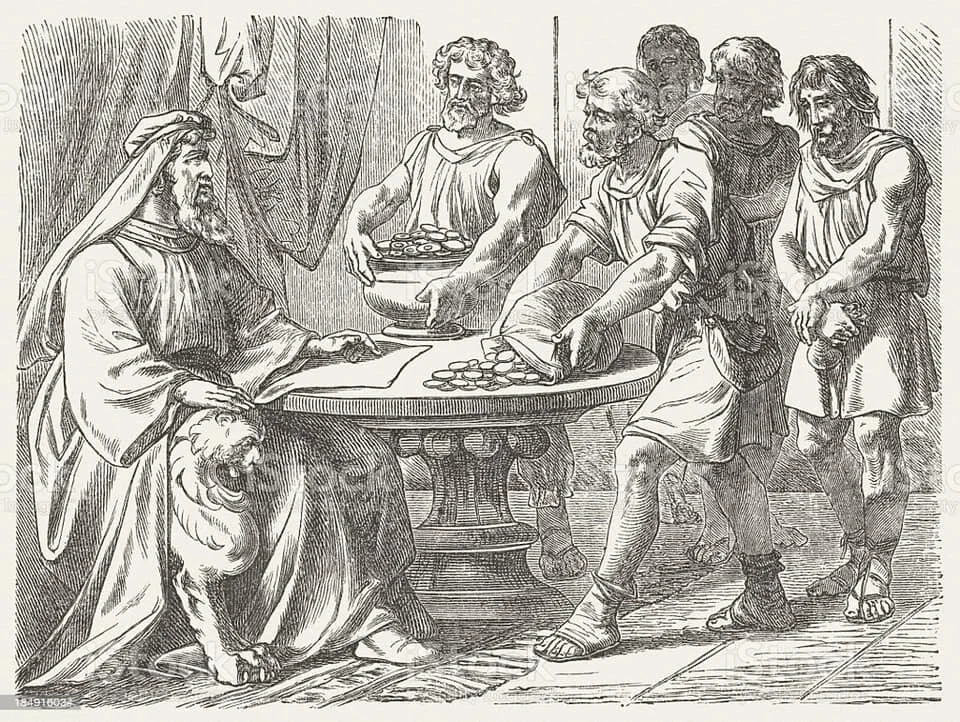
In the Parable of the minas, Jesus tells the story of a nobleman who goes out to a far country to receive a kingdom. The nobleman entrusted ten servants with one mina each and instructed them to do business in the land and to represent him in the marketplace.

Working the Land
What are you doing to cultivate the place where you live? How are you producing for the welfare of you, your family and the people who live around you?
Since the beginning of creation God placed humanity in a garden and invited us to have dominion over the earth, to cultivate the garden, and to fill the earth and to subdue it.
Everyone benefits from the cultivation of place and the flourishing that comes from working the land and producing the fruit of our labor.
When God’s people were exiled in Babylon, God spoke through the Prophet Jeremiah, encouraging them to flourish while in exile.

God is Working
Does God work? And if God works, does God take a break from his work? What would happen if God ceased to do work?
Work is good. God is always at work in the world. God also rests from his labors, but God is steady at work for his purposes in the world.
John’s Gospel tells us, after Jesus healed a man on the Sabbath Day, and asking him to pick up his mat and walk, the man went and told the Jews that it was Jesus who had healed him. Because Jesus was doing these things on the Sabbath, the Jews were persecuting Jesus. Jesus answered them, saying, “My Father is working until now, and I am working.” (John 5:15-17, ESV).

Without Work
What would the world look like without work? Would our own lives have provision, purpose, or prosperity without meaningful work?
Without work the fabric of God’s good plan for his creation comes unraveled. We were created to do good work. Work gives us provision and purpose. Work is good.
The wisdom of the Proverbs teaches us many practical truths about work. One Proverb says, “Whoever is lazy regarding his work is also a brother to the master of destruction.” (Proverbs 18:9).
Working to Share
What is the fruit of your labor? Who directly benefits from your work? Does your labor benefit the people in need who are in your sphere of influence?
Our work produces fruit that benefits us directly. Our work benefits our family. Our work benefits the church. And our work should benefit the people around us who are in need.
The Apostle Paul wrote the church in Ephesus, encouraging them in the way they should live out their faith, saying, “Let the thief no longer steal, but rather let him labor, doing honest work with his own hands, so that he may have something to share with anyone in need.” (Ephesians 4:28, ESV).

God’s Good Work
What good work has God prepared for you?
We are all created by God as his handiwork, created and designed by God for good works.
The Apostle Paul wrote the church in Ephesus, saying, “For we are his workmanship, created in Christ Jesus for good works, which God prepared beforehand, that we should walk in them.” (Ephesians 2:10, ESV).
Work is good. Work is God’s plan and God’s design for each of us. When we do God’s good work, we live out our purpose and we live out God’s good plan for our lives.

Direction
What goes into discerning the right direction? How do you know what decision is best and which way God is leading?
We all need direction from God in our lives. We need wisdom beyond ourselves. We need to know how God is leading us and which way is the right way to go.
The Psalmist wrote, “He leads the humble in what is right, and teaches the humble his way.” (Psalm 25:9, ESV).
When we seek God in humility, we are open to his leadership. It is then God leads us in what is right and teaches us his way.

God Of Peace, People Of Peace
Do you experience God’s Peace? Are you a person of peace?
Our God is a God of peace.
As followers of Jesus, we are called to be a people of peace.
In John’s gospel account, Jesus said, “Peace I leave with you; my peace I give you. I do not give to you as the world gives. Do not let your hearts be troubled and do not be afraid.” (John 14:27, NIV).
Jesus gives us his peace.
As followers of Jesus, we have been left with the peace of Jesus and we are to be people of peace in a troubled world.