
God’s Will—Your Purpose
What is God’s will for your life? What is your purpose? How do you discern God’s will and purpose for your life?
We are all here for a reason. We all have responsibility to God and meaningful work to do in this life.
The wise preacher and author of the Old Testament wisdom book of Ecclesiastes wrote, “The end of the matter; all has been heard. Fear God and keep his commandments, for this is the whole duty of man.” (Ecclesiastes 12:13, ESV).
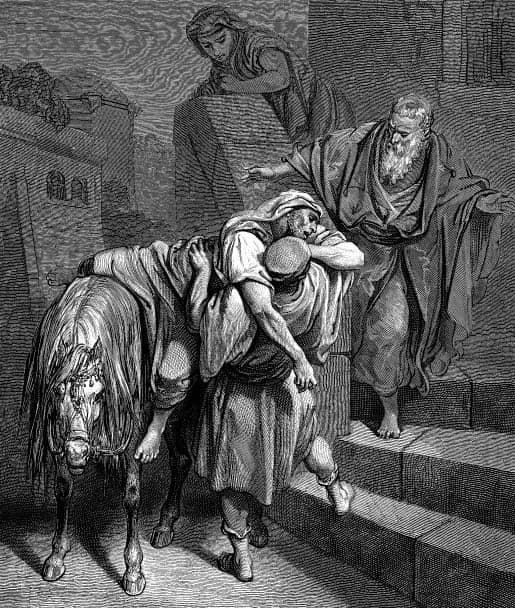
Being a Good Samaritan
Where do you find your justification? Do you seek to justify yourself, or do you find your justification from outside of yourself?
We cannot be justified apart from God’s help. There is not enough good that we can do to outweigh our brokenness and the things that we have thought, said, or done to sin against our holy God and against our neighbor.
In Luke’s gospel account a lawyer stood up to test Jesus, saying, “Teacher, what shall I do to inherit eternal life?” Jesus asked him, “What is written in the Law? How do you read it?” The lawyer answered, “You shall love the Lord your God with all your heart and with all your soul and with all your strength and with all your mind, and your neighbor as yourself.” And Jesus said to him, “You have answered correctly; do this, and you will live.”

Keeping it on the Level
How do you stay balanced in your life? How do you discern God’s good will and clear pathway for your life? What keeps you steady, stable, and sure footed?
It can be challenging to navigate the complexities of this life. As followers of Jesus we seek the will of God and his direction and blessing in all that we set out to do. We need God’s leadership, direction, and design for our lives. We need God’s Spirit to lead us and to direct our paths and footing on solid, smooth, and sure ground.
The Psalmist writes of this wisdom of the will of God, saying, “Teach me to do your will, for you are my God! Let your good Spirit lead me on level ground!” (Psalm 143:10, ESV).

Loving Our Enemies
How do we treat our enemies? In what ways does our treatment of others reflect our knowledge and love of God?
It is easy to love those who love us. It is infinitely more difficult to love those who are opposed to us or who do not have our best interest in mind.
It has been said that the true test of Christianity is not loving Jesus, but loving Judas.
As followers of Jesus we are called to love our enemies and to do good to those who could never reciprocate, or who would not care enough to desire to repay our good will.

Scarcity or Abundance
Do you think that there is enough and will be more, or do you believe that there is little and even what you have will be taken away or will run out? Do you have a scarcity mindset or an abundance mindset?
When we see that we have been given plenty and have plenty to give and to share, we will find that there is always more to give and to share. When we think that we have little and we do not give or share, we will soon find that we have nothing left for ourselves and we have nothing to give or to share.
The wisdom of the Proverbs tells us, “One gives freely, yet grows all the richer; another withholds what he should give, and only suffers want.” (Proverbs 11:24, ESV).

Children of Peace—Children of God
How can we be people of peace? What does being a peacemaker bring about in our lives?
As followers of Jesus we are called to be people of peace. We are to be peacemakers.
When we are people of peace we are blessed and the people around us are blessed and God considers us his children.
In the Sermon on the Mount in Matthew’s Gospel, Jesus proclaimed, “Blessed are the peacemakers, for they shall be called sons of God.” (Matthew 5:9, ESV).

Untouchable?
What makes someone untouchable?
Is it their personal hygiene that makes them untouchable? Is it their social status? Is it their religious observation or lack thereof?
When we think of the untouchable, we may think of someone with a communicable disease. We may think of how we just spent the last two years trying not to touch one another due to the pandemic. We may even consider someone untouchable because of something they did.
In the first century, leprosy was the number one condition that made someone untouchable. There were other issues that rendered someone ritually impure, but leprosy was one of the worst, because the diagnosis would often be a death sentence. This is why when Jesus reached out his hand and touched a man with leprosy, it shocked those who witnessed it.

Seventy or Seventy Two—Seventy and Me and You
Why were seventy people sent out to prepare the way for Jesus as laborers into the harvest? Why were they sent two by two? Why do some translations tell us that seventy-two were sent?
In the tenth chapter of Luke’s gospel account, Jesus sends out seventy or seventy-two people into the towns and villages, depending upon the translation. The English Standard Version records seventy-two people being sent, while the New King James Version records seventy people. Both translations have the people being sent two by two.
Sending the people two by two to bear witness, gave credibility to the people’s witness and their testimony upon their return. In the Law of Moses, God’s word instructs us, “Only on the evidence of two witnesses or of three witnesses shall a charge be established.” (Deuteronomy 19:15, ESV).

Responsibility of Freedom
What are the responsibilities that we have because of our freedoms? How should we use our privileges, freedoms, and independence?
With great gifts come great responsibility. We should never take our privileges, freedoms, and independence for granted. Freedom is never free, it was bought with a price. The liberties we have were fought for and hard-won. Therefore, we should never use our privileges, freedoms, and independence for our own selfish gain, or keep the benefits of these blessings to ourselves.
The Apostle Paul wrote the church in Galatia and instructed them concerning their gospel freedom, saying, “For you were called to freedom, brothers. Only do not use your freedom as an opportunity for the flesh, but through love serve one another.” (Galatians 5:13, ESV).

God’s Strength
Are you more reliant on your own strength or are you most reliant on God’s strength?
Our strength and ability is limited, but God’s strength knows no limits. Our strength is finite, but God’s strength is infinite.
The Prophet Isaiah wrote, “But I will sing of your strength; I will sing aloud of your steadfast love in the morning. For you have been to me a fortress and a refuge in the day of my distress.” (Psalm 59:16, ESV).

God’s Provision for Mission
How does God prepare us for mission? What are the challenges to the mission of God? What are the provisions of God to do the work God has called us to do?
When Jesus sent out the seventy-two on mission to prepare the way for his visitation, he warned them of the difficulties ahead of them. Jesus said, “Go your way; behold, I am sending you out as lambs in the midst of wolves.” (Luke 10:3, ESV).
Jesus wanted his followers to trust his provision for them and to count on the provision and hospitality of others. He requested that they “Carry no moneybag, no knapsack, no sandals, and greet no one on the road.“ (Luke 10:4, ESV).

Missional Prayer
Is your life filled with God’s mission? Are you seeing the work that needs to be done? Are you actively praying for the work that needs to be done and for workers to do the work?
The gospel of Luke tells us the Lord Jesus appointed seventy-two and sent them on ahead of him, two by two, into every town and place where he was about to go. He said to his disciples, “The harvest is plentiful, but the laborers are few. Therefore pray earnestly to the Lord of the harvest to send out laborers into his harvest.” (Luke 10:1-3, ESV).
God’s work is plentiful. We are called into the mission of God, to prepare his way, and to make him known. We are called to pray into the mission of God. We are called to pray for laborers to do the work of God—to reap a harvest of fruitful kingdom growth.

God’s Children
How is it that we are children of God? What is the process of God making us his children? What are the benefits of being God’s children?
As followers of Jesus who have received Jesus and believe in his name, we are children of God, with all the rights and privileges.
The Apostle John wrote this about becoming children of God through Jesus, saying, “But to all who did receive him, who believed in his name, he gave the right to become children of God.” (John 1:12, ESV).

Help in the Face of Fear
When you are afraid, where do you find the help you need to have courage to continue on?
We all need help and courage in the face of our fear.
God spoke through the Prophet Isaiah, encouraging people in the face of fear, saying, “For I, the LORD your God, hold your right hand; it is I who say to you, ‘Fear not, I am the one who helps you.’” (Isaiah 41:13, ESV).

Whose Life
Whose life are you living? Are you living your life, are you living someone else’s life, or are you living Jesus’ life for you?
We can live life according to our own standard and design. We can live life according to other peoples standards and design. Or, we can live life according to God’s standard and design.
The Apostle Paul wrote the church in Galatia, saying, “I have been crucified with Christ. It is no longer I who live, but Christ who lives in me. And the life I now live in the flesh I live by faith in the Son of God, who loved me and gave himself for me.” (Galatians 2:20, ESV).

Care for Anxieties
How do you find the care you need in the face of all your anxieties?
We live in anxious times. At baseline, life is filled with anxieties that can cause us deep distress and can bring out the worst in us.
When we are crippled by anxieties, we need a place to offload our troubles. We need to be able to place our anxieties at the feet of the one who cares deeply for us.
In his first letter, the Apostle Peter encouraged suffering believers, saying, “casting all your anxieties on him, because he cares for you.” (1 Peter 5:7, ESV).

God’s Goodness, Love, and Faithfulness
How good is God? What is the extent of God’s love for us? Is there a limit to God’s faithfulness?
The very nature of God is goodness. God is good. God’s love for us is steady and firm. God’s love for us has no end. God’s love endures. God is faithful. God’s faithfulness continues from generation to generation.
The Psalmist writes of God’s goodness, love, and faithfulness, saying, “For the LORD is good; his steadfast love endures forever, and his faithfulness to all generations.” (Psalm 100:5, ESV).

Asking and Receiving
What do you receive from God? What are you asking from God?
Prayer is asking God for what we need and hope to receive. Prayer is seeking God and finding him. Prayer is knocking on doors that we hope will be opened to us.
In the gospel of Matthew, Jesus said this about prayer, “For everyone who asks receives, and the one who seeks finds, and to the one who knocks it will be opened.” (Matthew 7:8, ESV).

Fearing God
Who do you respect the most? What is your level of fear, or reverence, for those you respect the most? Does your fear of God exceed the reverence you have for everyone else in your life?
Revering God is the beginning of insight, knowledge, and wisdom. To fear God is to respect God for who he is.
The wisdom of the Proverbs tells us, “The fear of the LORD is the beginning of wisdom, and the knowledge of the Holy One is insight.” (Proverbs 9:10, ESV).

Vigilance of Heart
How vigilant are you over your life? How vigilant are you over your heart? Are you keeping watch over your heart with vigilance? Are you flowing with life?
We must be watchful over our lives. We must be watchful over our heart. It is from our heart that our lives flow. To be vigilant of our heart is to have a wellspring of life.
The wisdom of the Proverbs tells us, “Keep your heart with all vigilance, for from it flow the springs of life.” (Proverbs 4:23, ESV).