
Increased Faith
How much faith in God do you have? How much faith in God do you need?
A little faith in our big God can produce astronomical and miraculous results.
In Luke’s gospel account, “The apostles said to the Lord, ‘Increase our faith!’ And the Lord said, ‘If you had faith like a grain of mustard seed, you could say to this mulberry tree, ‘Be uprooted and planted in the sea,’ and it would obey you.” (Luke 17:5-6, ESV).

Forgiveness
Are you monitoring your level of forgiveness? Do you find it easy or difficult to forgive others?
In regards to forgiveness, we must be watchful of ourselves. We must be willing to correct those who sin against us and stand ready to forgive when they repent.
In Luke’s gospel, Jesus taught on forgiveness, saying, “Pay attention to yourselves! If your brother sins, rebuke him, and if he repents, forgive him, and if he sins against you seven times in the day, and turns to you seven times, saying, ‘I repent,’ you must forgive him.” (Luke 17:3-4, ESV).

Temptation
Have you ever been tempted to do the wrong thing? Have you ever tempted others to do wrong? Which is worse, being tempted or tempting others?
Being tempted to do wrong is not the same as doing wrong. Enticing others to do what they should not do is wrong.
We should resist temptation and not be too hard on ourselves when we are tempted. We should never tempt others.
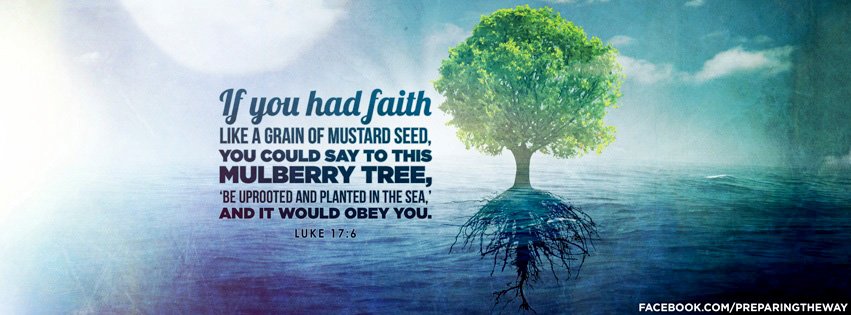
Faith In Everything
How big is your faith? Do you have faith in God in everything? Is your faith in God little? Is your faith so small that if you exercised it, the result would clearly be God's answer and God's powerful work in the miraculous outcome?
We need to exercise faith in God in everything. We need to trust our big God with whatever faith we have, in every area of our lives, so that God can do his powerful and magnanimous work in our lives.
In Luke's gospel account, the apostles said to Jesus, “Increase our faith!” And Jesus said to them, “If you had faith like a grain of mustard seed, you could say to this mulberry tree, ‘Be uprooted and planted in the sea,’ and it would obey you." (Luke 17:5-6, ESV).

Walking Well
How are you walking through this life? Who are you keeping in step with? Who are you walking like? Are you walking well?
When we walk through this life, it is easy to fall in step with the crowd. We can walk as the people around us and find ourselves walking in their ways—for better or for worse.
As followers of Jesus, we are to walk in the same way as Jesus walked. We are to keep in step with him.
The Apostle John wrote this encouragement in his first letter, saying, “Whoever says he abides in him [Jesus] ought to walk in the same way in which he walked.” (1 John 2:6, ESV).

The Narrow Way
How wide is the way you are traveling? Are you able to navigate the narrow way?
There are paths that are wide and there is a way that is narrow. The wider path leads to destruction. The narrow way is difficult and leads to life.
In Matthew’s Gospel Jesus said, “Enter by the narrow gate. For the gate is wide and the way is easy that leads to destruction, and those who enter by it are many. For the gate is narrow and the way is hard that leads to life, and those who find it are few.” (Matthew 7:13-14, ESV).

Abide
What or who are you abiding in? What is abiding in you?
When we abide in something or someone, we bear the fruit of what or who we are abiding in.
Jesus instructed his followers to abide in him so that he would abide in us so that we would bear kingdom fruit.
In John’s gospel account, Jesus said, “Abide in me, and I in you. As the branch cannot bear fruit by itself, unless it abides in the vine, neither can you, unless you abide in me.” (John 15:4, ESV).

Help is Coming
Where does your help come from? Where are you looking for the help you need?
We all need help at some point in our lives. It is possible to look for help in places where no help is coming.
The Psalmist writes, “I lift up my eyes to the hills. From where does my help come? My help comes from the Lord, who made heaven and earth.” (Psalm 121:1-2, ESV).

Our Mindful God
When you consider who God is and what God has made, does it leave you in awe? Are you aware that God is mindful of you?
God has created the universe and everything in it and God takes time to be mindful of each of us. God cares deeply for all his creation.
The Psalmist writes, “When I look at your heavens, the work of your fingers, the moon and the stars, which you have set in place, what is man that you are mindful of him, and the son of man that you care for him?” (Psalm 8:3-4, ESV).

Plans
Are you a planner? Do you have plans for your future? What if your plans were replaced by God’s plans for your life?
Planning is important. It has been said, “Failing to plan is planning to fail.” While it is essential that we make plans, our plans should always yield to God’s plans.
The wisdom of the Proverbs says, “Many are the plans in the mind of a man, but it is the purpose of the LORD that will stand.” (Proverbs 19:21, ESV).

Who You Serve
Who do you serve? How do you know who you are serving?
We serve who and what we love.
When we love something or someone, we spend our time, attention, and resources pursuing that thing or that person.
In Luke’s gospel Jesus taught, “No servant can serve two masters, for either he will hate the one and love the other, or he will be devoted to the one and despise the other. You cannot serve God and money.” (Luke 16:13, ESV).

Waiting for God
Is it easy or difficult for you to wait? What is worth waiting for? What are the challenges and the benefits of waiting?
There is a saying that goes, “Some things are worth the wait.” Someone else has said, “Some things cannot be hurried and some things cannot wait.”
Waiting is important and is a necessary skill to develop. Waiting is an essential part of life. Waiting is an essential component in our relationship with others and with God. We must wait.

Faithful In Everything
Are you being faithful in the major areas of your life? Are you being faithful in the small things? What about those things being entrusted to you? Are you being faithful in all things?
As followers of Jesus we are called to be faithful in every detail of life. We are called to be faithful in what is ours and in what is being entrusted to us. We are to be faithful in the big things and in the little things that God gives us.
In Luke’s gospel account Jesus said, “If then you have not been faithful in the unrighteous wealth, who will entrust to you the true riches? And if you have not been faithful in that which is another's, who will give you that which is your own?” (Luke 16:11-12, ESV).

Faithful With What You Have
What are you doing with what you have? Are you proving to be faithful with what you have been given—no matter what it is you have been given?
It has been said that past performance indicates future behavior.
What we do with what we have been given indicates how we will function if we are given more.
In Luke’s gospel account, Jesus said, “One who is faithful in a very little is also faithful in much, and one who is dishonest in a very little is also dishonest in much.” (Luke 16:10, ESV).

Planting Seeds and Harvesting
What seeds are you planting? What harvest do you expect to receive? Are you aware of the link between the type and the amount of seeds you are sowing and the harvest you expect to receive?
If we do not plant anything, we will not receive a harvest. If we plant abundantly, we will harvest an abundance. If we sow bad seed, we will have a bad return at harvest. If we sow good seed, we will harvest a good return.
The Apostle Paul wrote the church in Corinth, saying, “The point is this: whoever sows sparingly will also reap sparingly, and whoever sows bountifully will also reap bountifully.” (2 Corinthians 9:6, ESV).

Who You Work For
Why do you do the work you do? What is the purpose of your work? Who do you work for?
Your work has value, purpose, and meaning. Why we do our work matters. Who we do our work for matters.
When we work to serve and to glorify God, it changes the motivation of our work and the quality of our work.
The Apostle Paul wrote the Colossian Church, saying, “Whatever you do, work heartily, as for the Lord and not for men, knowing that from the Lord you will receive the inheritance as your reward. You are serving the Lord Christ.” (Colossians 3:23-24, ESV).

Healed and Whole
Have you ever had a broken heart? Have you ever felt wounded or broken?
When we have been crushed, or find ourselves in deep grief or loss, we may feel brokenhearted. When we experience trauma in our lives we may say we have been wounded.
When we experience being brokenhearted or wounded we long for the healing and the restoration that only God can bring.
The Psalmist declares God’s healing and restoration when he proclaims, “He heals the brokenhearted and binds up their wounds.” (Psalm 147:3, ESV).

Finding What is Lost
What would you do if you lost ten percent of all you had? Would you look for what you lost? What if you lost a day, would you spend an hour trying to get it back?
In Luke’s gospel account, Jesus told The Parable of the Lost Coin about a woman who lost ten percent of the coins she had, equaling an entire day’s wages.
Jesus said, “Or what woman, having ten silver coins, if she loses one coin, does not light a lamp and sweep the house and seek diligently until she finds it? And when she has found it, she calls together her friends and neighbors, saying, ‘Rejoice with me, for I have found the coin that I had lost.’ Just so, I tell you, there is joy before the angels of God over one sinner who repents.” (Luke 15:8-10, ESV).

Discipleship is Seeing and Leading
Can you see where you are, where you are going, and where you need to be? Are you able to see clearly enough to lead someone else along the way?
Discipleship is seeing the way, going the way, and showing the way.
In Luke’s gospel account, Jesus told his disciples a parable, saying, “Can a blind person guide a blind person? Will not both fall into a pit? No disciple is superior to the teacher; but when fully trained, every disciple will be like his teacher.” (Luke 6:39-40, ESV).
When we see the way clearly, we can live the way, and if we can live the way of Jesus, we can show others how to live the way of Jesus.

Discipleship is Imitation
Who are you like? Who do you emulate and pattern your life after?
We become like those we imitate. Who we spend time with and who we listen to shapes our thinking, our speaking, and our actions. Discipleship is imitation.
The Apostle Paul wrote the church in Ephesus, encouraging them in their spiritual growth, saying, “Therefore be imitators of God, as beloved children.” (Ephesians 5:1, ESV).
If we are going to be disciples of God, we must be imitators of God as his loved children. We become more like who we are supposed to be and more like God as we emulate him in our lives.